US naturalization civics test
US citizenship civics test
The oral test about American government and history that you take at your naturalization interview.
The civics test is the part of the naturalization interview in which a USCIS officer asks you questions about American government and history. If you pass it, together with the English test and the other requirements, you can become a U.S. citizen.
It is an oral test. The officer asks up to 20 questions from the official list of 128 and you must answer 12 correctly. On Asagno you study the questions with their answers, and then you take a timed multiple-choice practice exam.
Here you can read a guide to each of the seven topics of the test, study the questions and practise. The questions are based on the official USCIS list, which is public domain.
The civics test is only one part of the interview. You also take an English test (reading, writing and speaking). Practise English itself with the practice exams. Practise English exams
The exam at a glance
Test
Oral civics test at the naturalization interview
Questions
Up to 20 asked, from a list of 128
To pass
12 correct answers
Version
2025 test, for applications filed on or after 20 Oct 2025; earlier applicants may be on the 100-question 2008 test
65/20 rule
Age 65+ with 20 years as a permanent resident: 20 marked questions, 10 asked, 6 correct
Also tested
English reading, writing and speaking, separately
Practise
Study the questions first, then take the timed practice exam to see where you stand.
Study the questions
Every question of the practice bank with its answer, by topic. Check yourself, reveal the answer and mark what you don’t know yet.
Timed practice exam
20 questions drawn at random from the bank, with the real exam’s time limit and pass mark.
Coming soon
What the exam covers
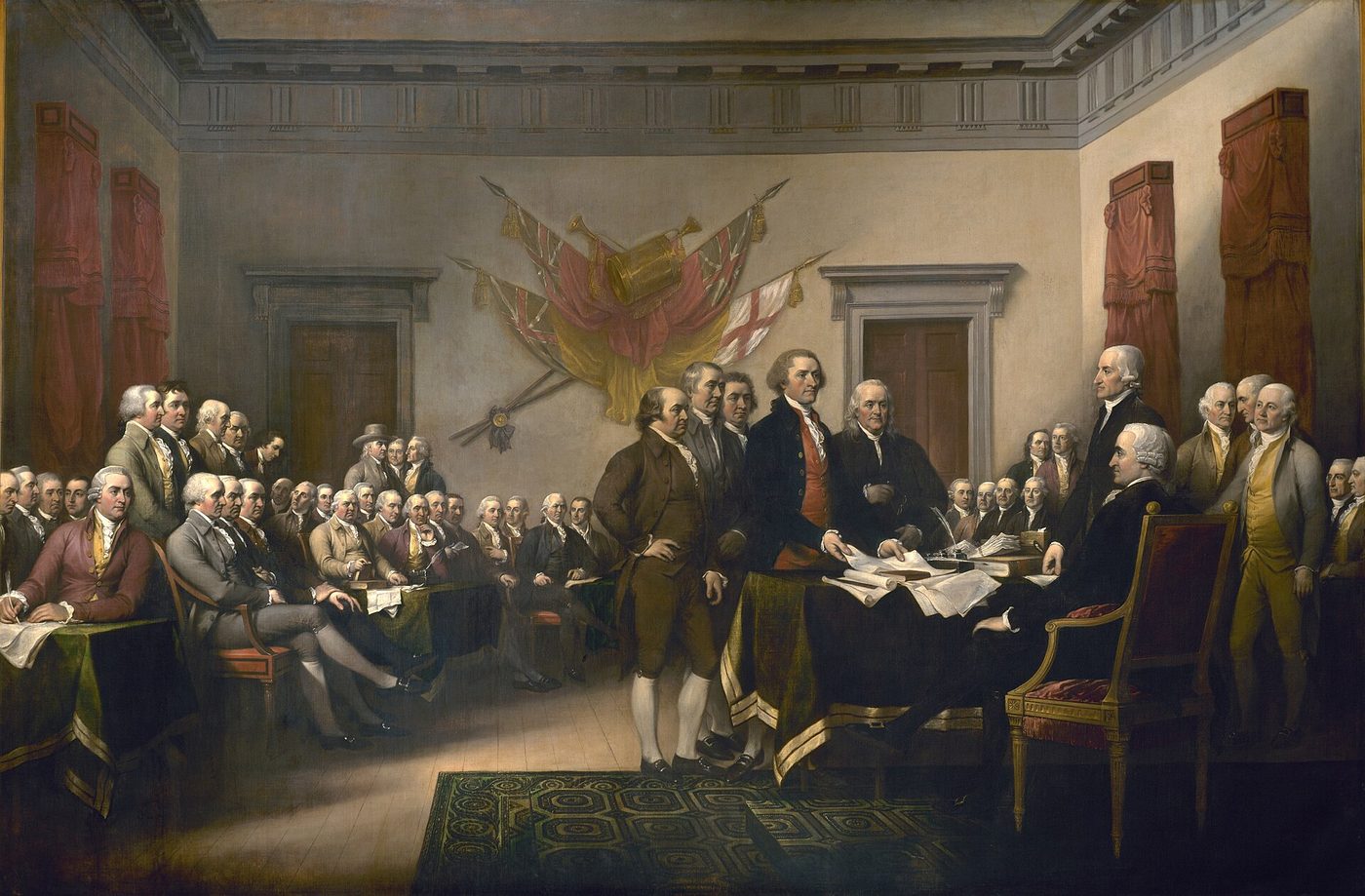 Principles of governmentThe Constitution, the Declaration of Independence, rule of lawRead the guide
 System of governmentCongress, the president, the courts, the statesRead the guide
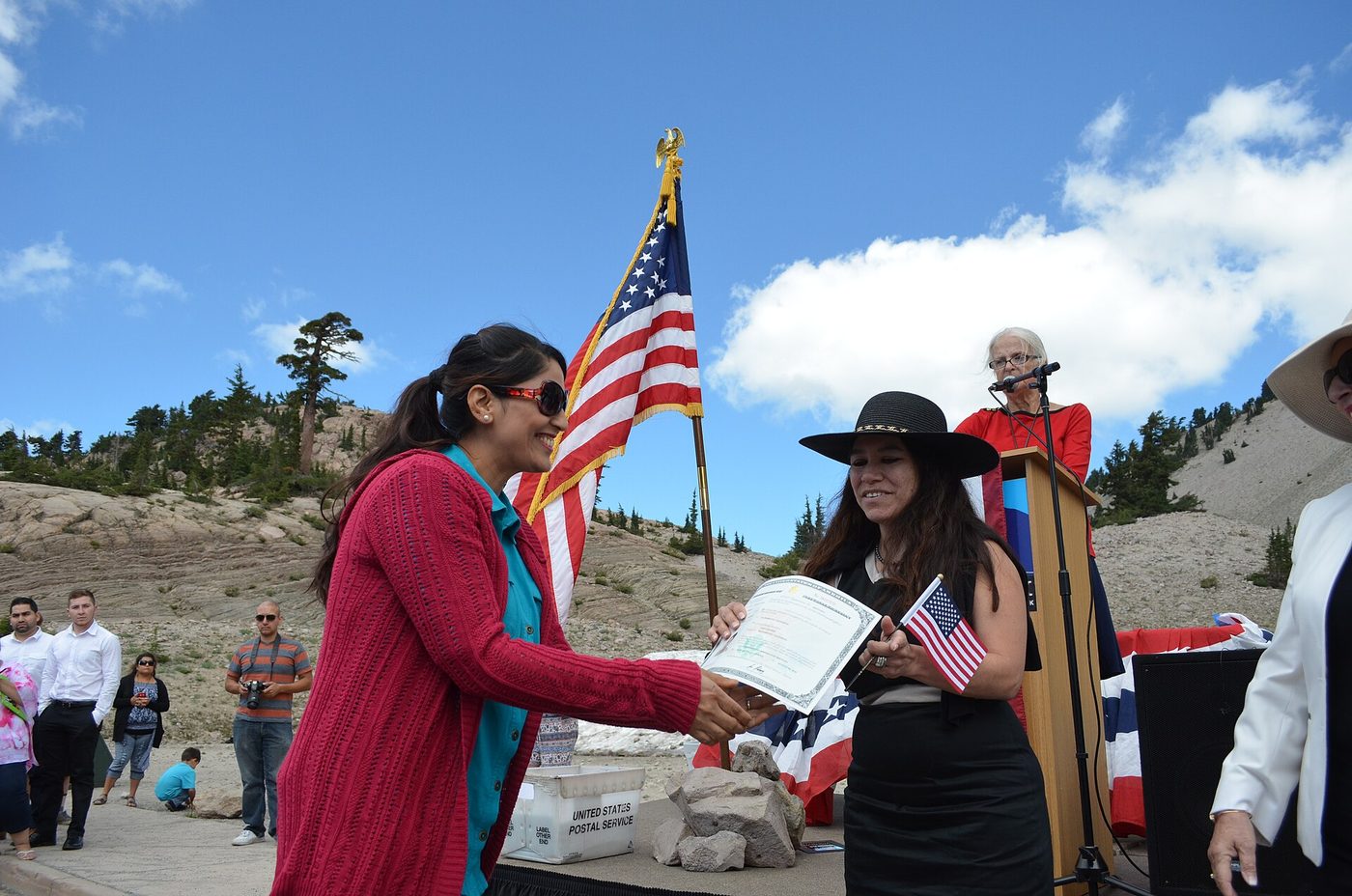 Rights and responsibilitiesVoting, the Oath, taxes, civic participationRead the guide
 Colonial period and independenceThe colonies, the Revolution and the FoundersRead the guide
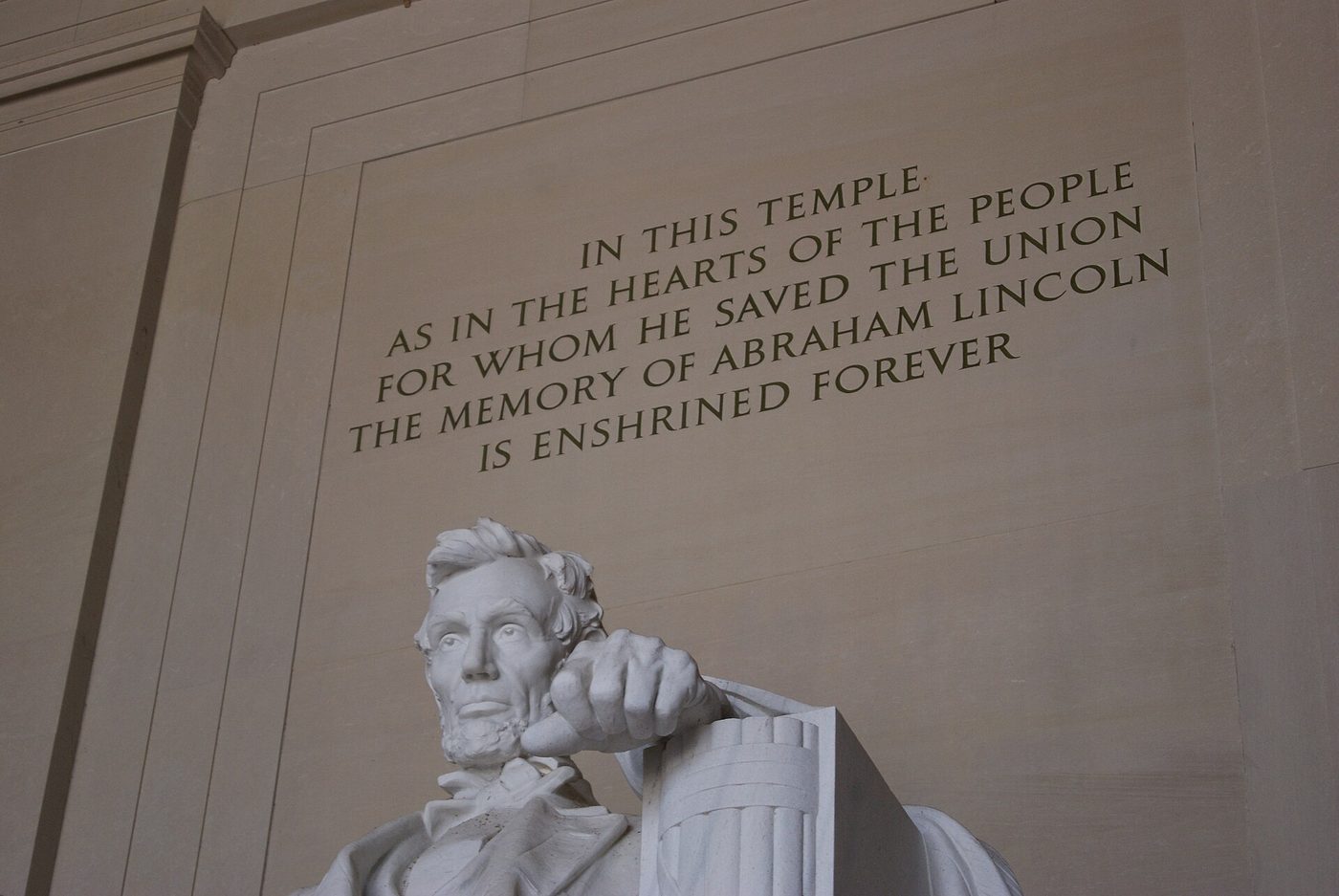 The 1800sExpansion, the Civil War, slavery and reformRead the guide
 Recent American historyThe world wars, civil rights, the Cold War, 9/11Read the guide
 Symbols and holidaysThe flag, the anthem, national holidaysRead the guide
Photo credits
- The principles of American government: Photo: John Trumbull, Public domain, via Wikimedia Commons
- The system of government: Photo: Noclip, Public domain, via Wikimedia Commons
- Rights and responsibilities of citizens: Photo: LassenNPS, Public domain, via Wikimedia Commons
- The colonial period and independence: Photo: William Halsall, Public domain, via Wikimedia Commons
- The 1800s: expansion, the Civil War and reform: Photo: Erich Robert Joli Weber; sculptor w:Daniel Chester French, Public domain, via Wikimedia Commons
- Recent American history: Photo: Project Apollo Archive, Public domain, via Wikimedia Commons
- American symbols and holidays: Photo: Ben White benwhitephotography, CC0, via Wikimedia Commons
All photos are public domain or freely licensed (CC0, CC BY, CC BY-SA). Every guide shows the credit of each of its photos.
Guides
- Principles of American governmentThe Constitution, the Declaration of Independence, the Bill of Rights, the 27 amendments, the rule of law and checks and balances: the first theme of the US civics test, with a real question.Principles of governmentRead the guides
- The system of governmentCongress, the president, the Supreme Court and the states: how many senators and representatives, how long each serves, who signs and vetoes bills, and the federal and state powers, with a real civics test question.System of governmentRead the guides
- Rights and responsibilitiesWho can vote, serve on a jury and run for office, the Oath of Allegiance, taxes, the Selective Service and civic participation: the rights and responsibilities questions of the US civics test.Rights and responsibilitiesRead the guides
- American history for the civics testThe history questions of the US civics test: colonial period and independence, the 1800s and the Civil War, the world wars, the Cold War, civil rights and September 11, with a real question.Colonial period and independenceThe 1800sRecent American historyRead the guides
- Symbols and holidaysThe flag, the anthem, the Statue of Liberty, Washington D.C. and the national holidays: the symbols and holidays section of the US civics test, with a real question.Symbols and holidaysRead the guides
How it works, step by step
Check that you can apply
Before you study, make sure that you meet the requirements for naturalization, so that you do not pay a fee for an application that is refused.
- Most applicants must be 18 or older and be a lawful permanent resident (a green card holder) for 5 years, or for 3 years if married to a U.S. citizen and living with the spouse.
- You must have lived in the United States continuously, have been physically present for enough time, and have lived in your state or USCIS district for the required period.
- You must show good moral character, support the Constitution and be able to take the Oath of Allegiance.
- The rules have exceptions. Check the current requirements on the USCIS website.
Know the format and the pass mark
The civics test is oral and short. Knowing how it works makes it less frightening.
- The officer asks you up to 20 questions, in English, from the official list of 128, and stops when you have 12 correct answers.
- Many questions accept several correct answers; you only need to give one. If a question asks for a number, such as two answers, you must give the required number.
- If you are 65 or older and have been a permanent resident for 20 years or more, you study only 20 marked questions (the “65/20” rule), the officer asks 10 and you need 6 correct.
- The test version depends on when you filed your application: the 2025 test applies to applications filed on or after 20 October 2025. Check your notice.
Get the official USCIS study materials
USCIS publishes the list of questions and answers, and free study materials. They are the source of every question.
- The list of the 128 questions and answers is a PDF on uscis.gov. There are also flash cards, audio and videos.
- Use our guides next to them: they explain the same topics in simple English and Arabic, with the key words that appear in the questions.
- Learn the official answers as they are written; the officer compares your answer with the list.
Read the seven topic guides
Our seven guides cover the topics of the question bank: principles of government, system of government, rights and responsibilities, and four parts of American history and symbols.
- Each guide has photos, short sections, a list of key words with their meaning and a box of things to remember.
- Read one guide a day. Seven guides in a week is a good rhythm for most people.
- Start with the principles of government: the Constitution and the three branches explain many other answers.
Learn the numbers, dates and names
The test asks for a lot of short facts. They are the easiest marks once you have learned them.
- Numbers: 27 amendments, 3 branches, 100 senators (6 years), 435 representatives (2 years), 9 Supreme Court justices, 13 stripes and 50 stars.
- Dates: 1776 (Declaration), 1787 (Constitution), 1861–1865 (Civil War), 1941 (Pearl Harbor), 1964 (Civil Rights Act), 2001 (September 11).
- Names: Washington, Jefferson, Madison, Franklin, Lincoln, Roosevelt, Martin Luther King Jr.
- Write them on cards and say them aloud, because the real test is spoken.
Check the answers that change
Some questions have answers that depend on the day or on where you live. They are not in a fixed list, so you must look them up before your interview.
- The names of the president, the vice president, the Speaker of the House and the Chief Justice of the Supreme Court.
- Your state: the names of your two senators, your representative, your governor and the capital of your state.
- The parties of the president and the Speaker, and the current answers on the USCIS “test updates” page.
Study the questions by topic
After each guide, study the questions of that topic. You see the question and its answer, with Arabic help, and you can mark the ones you do not know yet.
- Open the study page from the guide: it goes straight to the questions of that topic.
- Say the answers aloud, as you will at the interview, and mark the questions you got wrong.
- Check the marked questions again two or three days later.
Take the timed practice exam
The practice exam is a multiple-choice version of the test, to check what you remember.
- 20 questions, with a timer, drawn from the bank. Do it in one go, without notes.
- You get the score and a review of every answer. Aim for at least 16 out of 20 to be safe over the 12 needed.
- Repeat it until you pass several times in a row. Remember that the real test is spoken, so also practise answering without the options.
The interview, the result and the Oath
On the day of the interview, the civics test is one part of a longer meeting with a USCIS officer.
- Bring your appointment notice, your green card, your passport and any other documents listed in the notice. The officer checks your application, and you take the English test and the civics test.
- If you pass, USCIS tells you what happens next. If a decision is made, you get an invitation to the naturalization ceremony, where you take the Oath of Allegiance and become a citizen.
- If you fail a part, you get a second chance: USCIS tests you again on the part you failed, normally 60 to 90 days after the first interview.
- After the ceremony you receive your Certificate of Naturalization, and you can apply for a U.S. passport and register to vote.
Questions people ask
What is the civics test?
It is the oral test about American government and history that you take at your naturalization interview. An officer asks you questions from an official list, and you must answer enough of them correctly.
How many questions are asked, and how many must I get right?
In the 2025 test the officer asks up to 20 questions from a list of 128, and you pass with 12 correct answers. The officer stops when you reach 12 right (or when it is no longer possible to pass).
Which version of the test will I get?
It depends on when you filed your application. The 2025 test applies to applications filed on or after 20 October 2025; earlier applicants may take the 2008 test of 100 questions. USCIS publishes both lists: check your notice and the USCIS test-updates page.
Is this the real test?
No. The real test is spoken: an officer asks and you answer. Here the questions come from the public USCIS list, but you choose from four answers. It is practice for the content, not a copy of the interview.
What if a question has several correct answers?
Many questions have a list of acceptable answers, and you only need to give one of them. Some ask for a number of answers, such as “name two rights”, and then you must give that number.
What are the questions with answers that change?
Questions about who holds an office today (the president, the vice president, the Speaker of the House, the Chief Justice) and about your own state (your senators, representative, governor and capital). They are not in the bank, so look them up before the interview.
What is the 65/20 rule?
If you are 65 or older and have been a lawful permanent resident for at least 20 years, you study only 20 marked questions, the officer asks 10 of them and you need 6 correct. You can also take the test in your own language, with an interpreter.
Do I also need to pass an English test?
Yes, in most cases. At the interview you show that you can read, write and speak basic English. This is separate from the civics test. Some people are exempt because of age and years of residence, or a medical condition.
How much does it cost to apply?
USCIS sets the application fee (Form N-400) and it changes, so look at the current amount on uscis.gov. Some people qualify for a reduced fee or a fee waiver. The civics test itself has no separate fee.
What happens if I fail?
You get a second chance: USCIS gives you another test on the part you failed, normally 60 to 90 days after the first interview. If you fail again, the application is denied, and you may be able to apply again later.
How long should I study?
For most people three to six weeks of regular study is enough: one guide a day, then the questions, aloud, and several practice exams. If your English is at a beginner level, give yourself more time for the vocabulary.
Which topics are the most important?
The system of government is the largest topic, with the most numbers to learn, followed by principles of government and American history. Symbols and holidays are short and easy. All seven topics can come up, so prepare them all.
Can I ask for help if I have a disability?
Yes. People with a physical or mental disability can ask for an adapted interview or, in some cases, an exception to the tests with a medical certificate. USCIS explains the options, so ask before the interview.
Can the practice exam replace the official study materials?
No. The practice exam shows you what you remember, but the official USCIS list is the source of the questions and the accepted answers. Read the guides and the USCIS materials, and use the practice exam to check yourself.
Official sources
- USCIS: the 2025 civics test and study materials
- USCIS: the 128 questions and answers (PDF)
- USCIS: answers that have changed
The USCIS questions are US government material in the public domain. Rules and fees change: always check uscis.gov. Asagno is not affiliated with USCIS or the US government.
Learn the language from zero
Courses that build the vocabulary and grammar you need, level by level.