UK citizenship knowledge test
Life in the UK test
The 24-question computer test about British history, values, government and everyday life that you must pass to settle or become a British citizen.
The Life in the UK test is the knowledge test that most people must pass to apply for indefinite leave to remain (settlement) or British citizenship. It checks that you know the history, values, government and everyday life of the United Kingdom.
It is a computer test of 24 multiple-choice questions, with 45 minutes to answer. You pass with 18 right answers, which is 75%. The questions come from the official handbook, “Life in the United Kingdom: A Guide for New Residents”, which has four chapters.
Here you can read a guide to each of the four chapters, study the questions and take a timed practice exam. The questions are original Asagno questions on the same topics as the handbook.
The Life in the UK test is only the knowledge test. For settlement or citizenship you usually also have to prove your English, with a separate approved test: practise English itself with the practice exams. Practise English exams
The exam at a glance
Questions
24, multiple choice
Time
45 minutes
To pass
18 of 24 (75%)
Fee
£50 per attempt, booked online
Where
An approved test centre in the UK
Bring
The ID you used when booking
Practise
Study the questions first, then take the timed practice exam to see where you stand.
Study the questions
Every question of the practice bank with its answer, by topic. Check yourself, reveal the answer and mark what you don’t know yet.
Timed practice exam
24 questions drawn at random from the bank, with the real exam’s time limit and pass mark.
Coming soon
What the exam covers
 Values and principlesDemocracy, the rule of law, rights and responsibilitiesRead the guide
 A long and illustrious historyThe Romans, 1066, Magna Carta, the Tudors, two world warsRead the guide
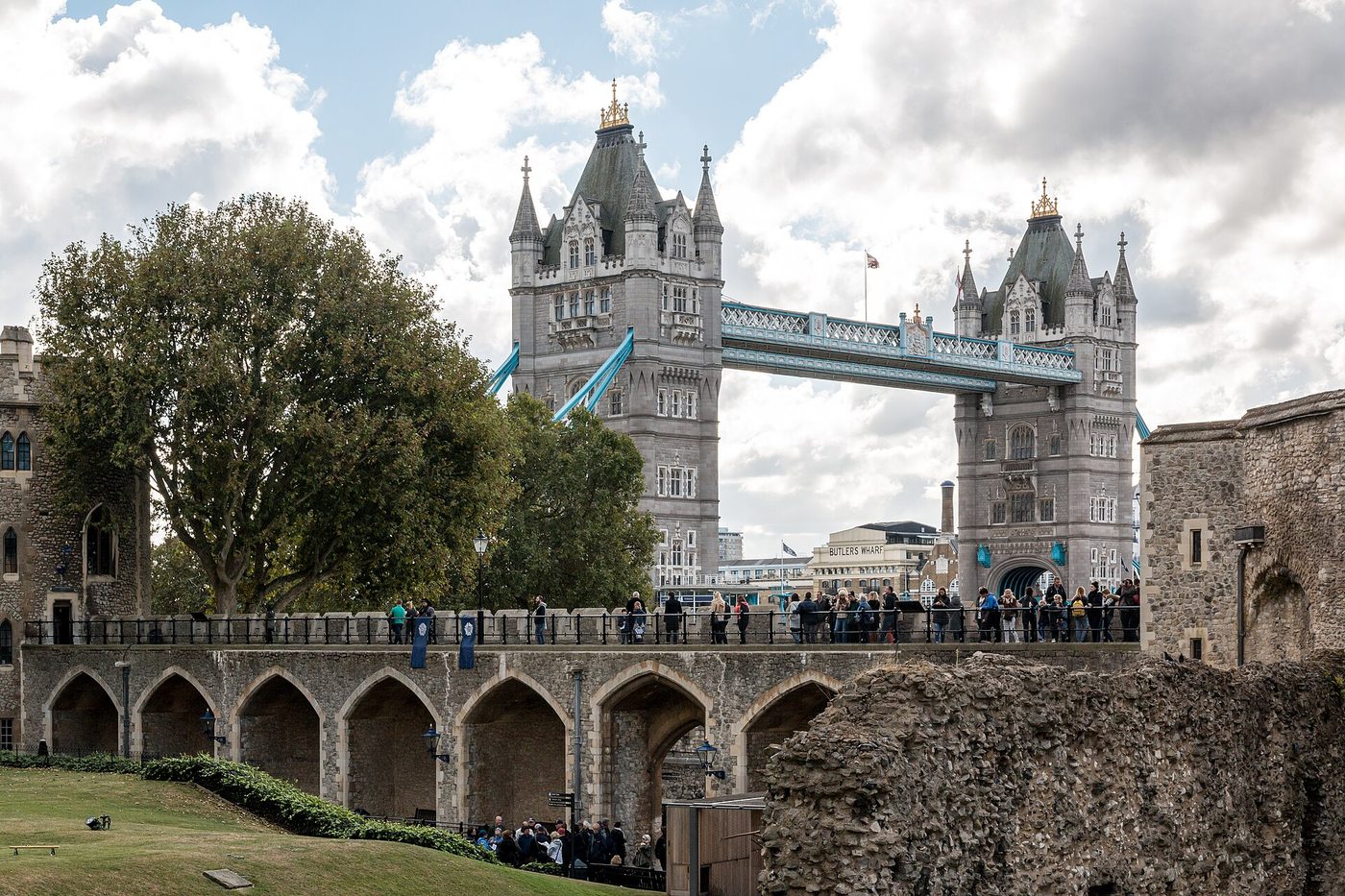 A modern, thriving societyThe four nations, festivals, sport, arts, placesRead the guide
 Government, law and your roleParliament, devolution, elections, courts, daily lifeRead the guide
Photo credits
- British values and principles: Photo: Bex Walton, CC BY 2.0, via Wikimedia Commons
- British history for the Life in the UK test: Photo: garethwiscombe, CC BY 2.0, via Wikimedia Commons
- Modern Britain: nations, traditions, sport, arts and places: Photo: Dietmar Rabich, CC BY-SA 4.0, via Wikimedia Commons
- The UK government, the law and your role: Photo: Grizzlyil, CC BY 4.0, via Wikimedia Commons
All photos are public domain or freely licensed (CC0, CC BY, CC BY-SA). Every guide shows the credit of each of its photos.
Guides
- British values and principlesDemocracy, the rule of law, individual liberty, rights and responsibilities, the four nations and their saints and capitals: the values and principles chapter of the Life in the UK test.Values and principlesRead the guides
- British history for the Life in the UK testThe Romans, 1066, Magna Carta, the Tudors, the Civil War, the Industrial Revolution, the world wars, the NHS and modern Britain: the history chapter of the Life in the UK test with a real question.A long and illustrious historyRead the guides
- Modern BritainPopulation and languages, religion and festivals, education, arts, literature, sport and famous places: the modern society chapter of the Life in the UK test, with a real question.A modern, thriving societyRead the guides
- Government, the law and your roleParliament, the Prime Minister, the monarch, devolution, the courts, the police, voting and local life: the government, law and your role chapter of the Life in the UK test.Government, law and your roleRead the guides
How it works, step by step
Check that you need the test
Not everybody has to take it. Confirm your own case before you pay.
- You normally need to pass it to apply for indefinite leave to remain or for British citizenship (naturalisation).
- Some people are exempt, for example people aged 65 or over, or with a long-term physical or mental condition. Check the exact rule on GOV.UK.
- You must be 18 or older to take the test. The English language requirement is separate.
- If you pass, you can use the result for your application: you do not need to take it again.
Know the format of the test
The test is the same for everybody, and knowing how it works takes away most of the stress.
- 24 questions on a computer, each with a few answers. Some questions ask for one answer, others for two.
- You have 45 minutes. You need 18 right answers (75%). Wrong answers do not take marks away.
- Questions cover the four chapters of the handbook: values and principles, history, modern society, and government, law and your role.
- The test is in English (it can be taken in Welsh or Scottish Gaelic in some centres).
Get the official handbook
The handbook “Life in the United Kingdom: A Guide for New Residents” is the source of every question. Check on GOV.UK which edition applies when you book, because the government has said it plans to update it.
- It is published by TSO (The Stationery Office) and sold as a book and an e-book. Many libraries have it.
- Read it once through, then go back to the chapters you find hardest. The history chapter takes the longest.
- Use our guides next to it: they explain the same chapters in simple English and Arabic, with the key words that appear in the questions.
Read the four topic guides
Our four guides match the four chapters of the handbook.
- Values and principles: the five principles and your rights and responsibilities.
- History: from Stone Age Britain to today, with the key dates and people.
- Modern society: the four nations, festivals, sport, arts and places.
- Government, law and your role: monarchy, Parliament, devolution, elections, courts and daily life.
Learn the key dates, numbers and names
The test asks for a lot of facts. These are easy marks if you have learned them.
- Dates: 1066, 1215 (Magna Carta), 1588, 1707, 1837, 1914–1918, 1939–1945, 1948 (the NHS), 1998.
- Numbers: 650 MPs, 5 years between general elections, vote at 18, 12 people on a jury, 999 for emergencies.
- Names: Alfred the Great, William the Conqueror, Elizabeth I, Cromwell, Victoria, Churchill, Shakespeare, Dickens.
- Write them on cards and review them every day.
Study the questions by topic
After each guide, study the questions of that topic. You see the question with the Arabic help under it, and you can mark the ones you do not know.
- Open the study page from the guide: it goes straight to the questions of that topic.
- Mark the questions you got wrong or guessed, and check them again two or three days later.
- Read each answer, not only the right one: the real test often shows wrong answers that sound true.
Take the timed practice exam
When you have read the guides and studied the questions, take the practice exam in the same conditions as the real test.
- 24 questions, 45 minutes, with a timer. Do it in one go, without notes.
- You get the score and a review of every answer. Aim for at least 21 out of 24 to be safe over the 18 needed.
- Repeat it until you pass several times in a row.
Book the test on GOV.UK
You book online, at an approved test centre, and you pay for each attempt. The fee and the centres can change, so always look at GOV.UK.
- Book at least three days before the test date. There are test centres in cities and large towns across the UK.
- The fee was £50 per attempt at the time of writing. Check the current amount before you pay.
- You must give the ID that you will take to the test when you book, and the name must match.
Test day, results and what comes next
Arrive early with the right ID. You get the result on the day.
- Bring the same ID you used to book. Without it you cannot take the test and you lose the fee.
- Phones and notes are not allowed in the test room. Read each question twice and do not leave any question empty.
- If you pass, you get a pass notification letter with a unique reference number. Keep it safe: you need it for your application.
- If you fail, you can book again, usually after a short wait of a few days, and pay again. Use the review of your practice answers to see what to improve.
Questions people ask
What is the Life in the UK test?
It is the knowledge test that most people must pass to apply for indefinite leave to remain or British citizenship. It has 24 multiple-choice questions about British history, values, government and everyday life.
How many questions are there, and what is the pass mark?
There are 24 questions and you need 18 right, which is 75%. You have 45 minutes. Wrong answers do not take marks away, so answer every question.
Where do the questions come from?
From the official handbook “Life in the United Kingdom: A Guide for New Residents”. The real questions are not public, so the questions here are original Asagno questions on the same chapters. Use them to practise, and read the handbook for the exact content.
Is the test changing?
The government has said that it plans to refresh the handbook and the test. Check GOV.UK for the edition that applies on the day you book, and use our guides for the topics that stay the same: values, government, law and modern society.
How much does the test cost?
The fee was £50 per attempt at the time of writing, paid when you book on GOV.UK. It can change, so look at the current amount before you pay. You pay again for every new attempt.
How do I book, and what ID do I need?
You book online at least three days ahead on GOV.UK and choose an approved test centre. On the day you must bring the same ID that you gave when you booked, and the name must match. If you do not, you cannot take the test.
Do I also have to prove my English?
For most applications, yes. The Life in the UK test is a separate requirement from the English language one, which you prove with an approved test or a qualification. Check the requirement for your application on GOV.UK.
Who is exempt from the test?
People aged 65 or over and people with a long-term physical or mental condition can be exempt, and there are some other cases. The rules are personal and can change, so check GOV.UK or ask a regulated adviser instead of deciding by yourself.
How long should I study?
For most people three to six weeks of regular study is enough. The history chapter takes the most time. Read one guide a few times a week, then study the questions and take several practice exams.
Which chapter is the hardest?
Most people say history, because of the many dates and names. Learn the main dates first (1066, 1215, 1588, 1707, 1837, 1914–1918, 1939–1945, 1948) and attach the people to them.
What happens if I fail?
You can book the test again after a short wait, and you pay the fee again. There is no limit on the number of attempts. Look at the review of your practice answers to see which chapters need more work.
How long is my pass valid?
A pass does not expire: once you have passed, you can use the result for any application that needs it. Keep your pass notification letter and its reference number.
Can I use the practice exam instead of the handbook?
No. The practice exam shows you what the test feels like and where you are weak, but the handbook is the source of the content. Read the guides and the handbook, then use the practice exam to check yourself.
Is the test only in English?
The test is in English, and in some centres it can be taken in Welsh or Scottish Gaelic. The English is quite simple, but you must read it yourself. That is why our questions show the English first, with Arabic help under it.
Official sources
Fees and rules follow GOV.UK at the time of writing; always check it before you book. Asagno is not affiliated with the Home Office or the UK government.
Learn the language from zero
Courses that build the vocabulary and grammar you need, level by level.