CCSE topic guide
Autonomous communities, provinces and municipalities
The 17 autonomous communities and 2 autonomous cities, provinces, municipalities, co-official languages and the capitals of the main regions: territorial organisation for the CCSE.
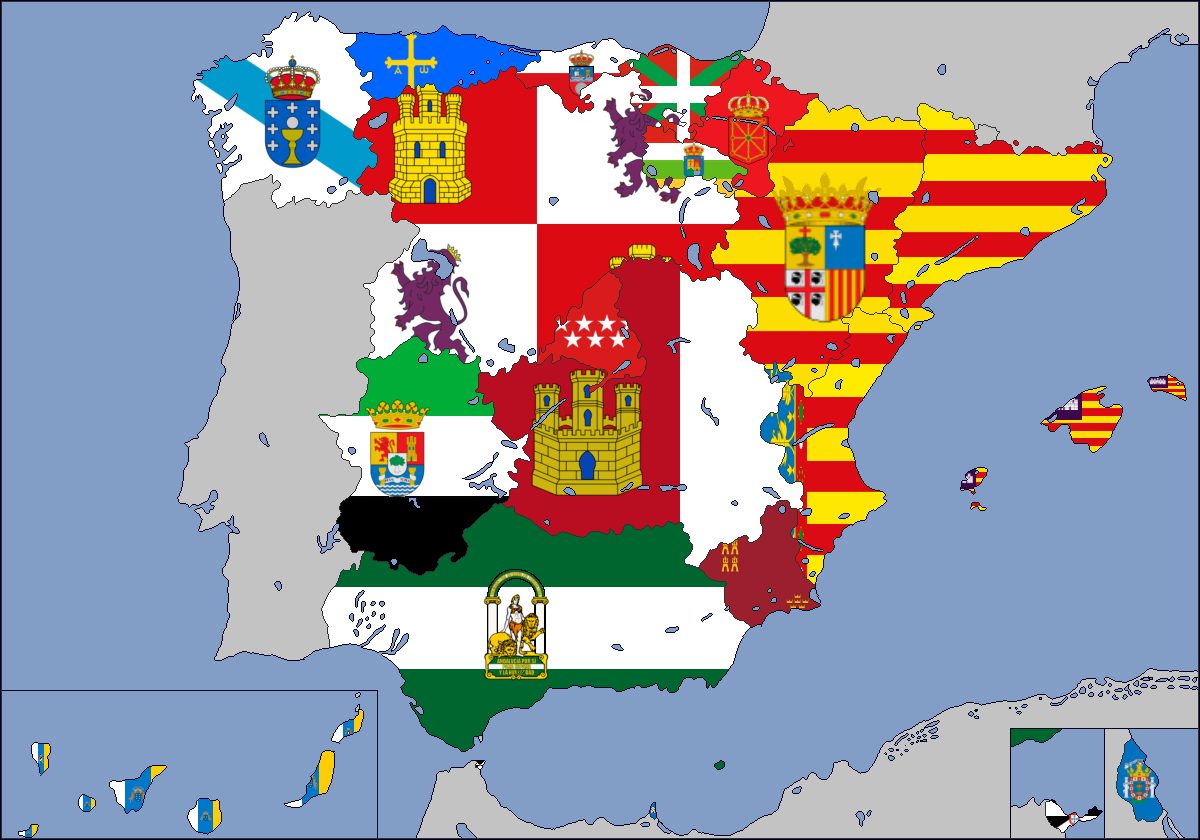
Spain is a single State with 17 autonomous communities, two autonomous cities, 50 provinces and more than eight thousand municipalities. Where the places are matters as much as how they are governed.
The first guide explains the communities, the provinces, the municipalities and the languages. The second places everything on the map: the neighbouring countries, the mountains, rivers and islands, and the climates of Spain.
How Spain is organised: communities, provinces and municipalities
The autonomous communities, the provinces, the municipalities and the languages of Spain.
What each guide covers
- The autonomous communitiesSpain is made up of 17 autonomous communities (comunidades autónomas) and two autonomous cities, Ceuta and Melilla, in the north of Africa.
- The provincesThe communities are divided into provinces.
- The municipalitiesThe municipality (municipio) is the smallest and closest level of government.
- The languages of SpainSpanish (castellano) is the official language of the whole State.
Remember for the exam
- 17 autonomous communities and 2 autonomous cities (Ceuta and Melilla); 50 provinces; more than 8,000 municipalities.
- Each community has a Statute of Autonomy, its own parliament and government, and powers such as health and education.
- The municipality is governed by the Ayuntamiento: the mayor and the councillors, elected every four years.
- Register where you live at the town hall (padrón municipal).
- Castilian is the official language; Catalan, Galician, Basque and Aranese are co-official in their areas.
The geography of Spain
Where Spain is, its neighbours, mountains, rivers, seas, islands and climate.
What each guide covers
- Position, borders and sizeSpain shares the Iberian Peninsula with Portugal.
- Mountains and highest peaksSpain is a mountainous country.
- RiversMost of the great rivers of Spain flow west to the Atlantic Ocean; some flow into the Mediterranean.
- Islands and climateSpain has two island groups, the Balearic Islands in the Mediterranean and the Canary Islands in the Atlantic, and several climates.
Remember for the exam
- Spain is in south-west Europe; neighbours: Portugal, France, Andorra, Morocco (Ceuta and Melilla) and Gibraltar.
- Seas: Atlantic and Mediterranean; the Strait of Gibraltar joins them.
- Highest mountain: Teide (3,718 m, Tenerife); highest on the peninsula: Mulhacén (Sierra Nevada).
- Longest river: the Tajo; the river with most water: the Ebro; main river of the south: the Guadalquivir.
- Islands: Balearic (Mediterranean) and Canary (Atlantic). Climates: Mediterranean, continental, oceanic.
A sample question from the bank
Pregunta: ¿Cuántas comunidades autónomas tiene España? Respuesta: 17.
Pregunta: ¿Cuáles son las dos ciudades autónomas de España? Respuesta: Ceuta y Melilla.
Questions people ask
Is there only one official language in Spain?
Castilian Spanish is the official language of the whole State; other languages are co-official in their communities.
How many provinces are there?
50.
How many autonomous communities are there?
There are 17 autonomous communities and 2 autonomous cities, Ceuta and Melilla. Each has a Statute of Autonomy, a parliament and a government, and its own powers, for example in health and education.
Which languages are official in Spain?
Castilian (Spanish) is official in the whole country. Catalan, Galician and Basque are also official in their own communities, and Aranese in the Val d’Aran.
More guides
Ready to practise?
Study the questions by theme, then take the timed practice exam.