Einbürgerungstest topic guide
Democracy and the Rule of Law (Demokratie und Rechtsstaat)
What the Einbürgerungstest actually asks about German democracy and the rule of law: the Bundestag, elections, the Basic Law, and the separation of powers — explained, with a real exam question.
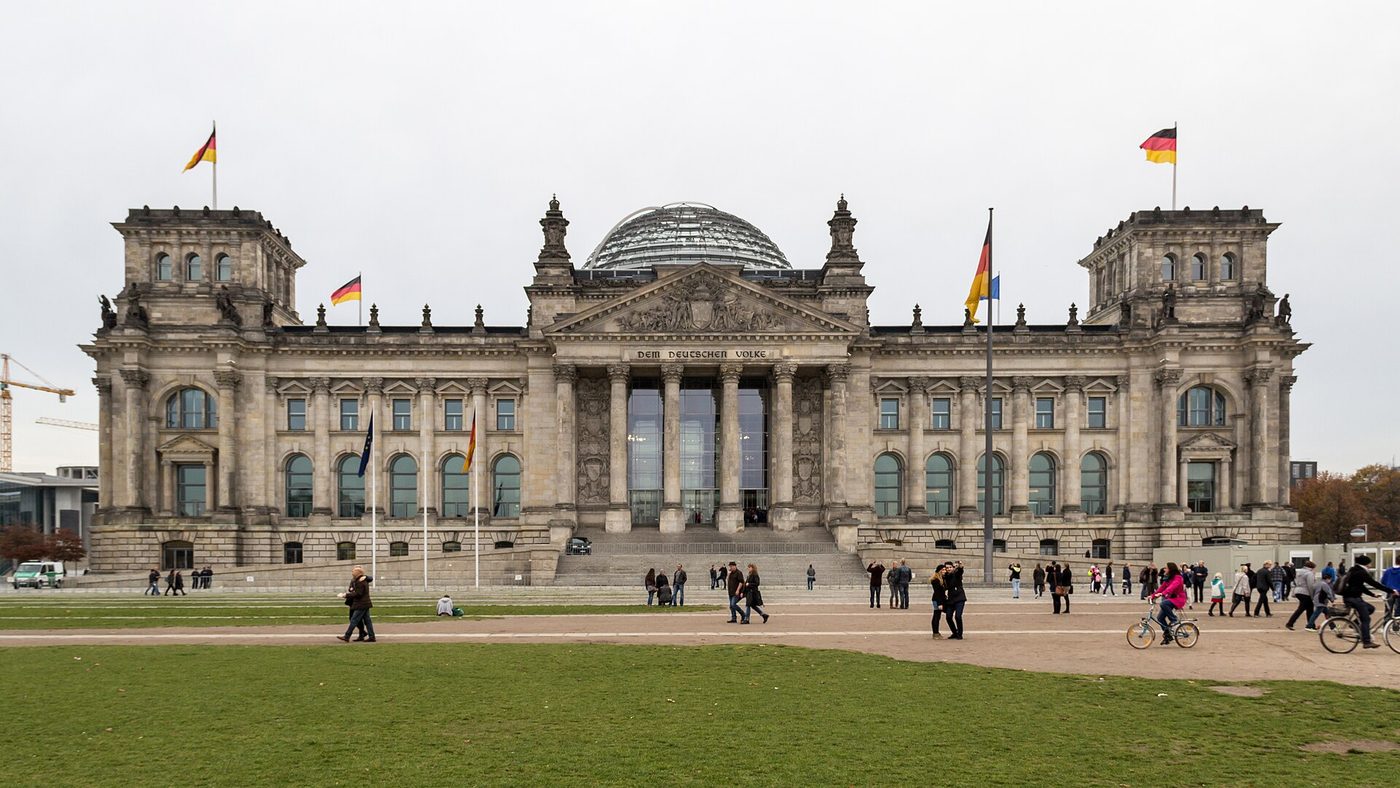
Democracy is the largest topic of the Einbürgerungstest, the area “Leben in der Demokratie”. It is really one idea seen from several sides: power in Germany is limited, divided, and always comes from the people.
The guide covers the Basic Law, the elections and the Bundestag, the Chancellor, the government and the President, the Bundesrat and federalism, and the parties.
Democracy in Germany: the Basic Law, elections and the state
The Grundgesetz, the Bundestag and how it is elected, the Chancellor, the President, the Bundesrat and the parties.
What each guide covers
- The Basic Law (Grundgesetz)The Basic Law is the constitution of the Federal Republic of Germany.
- Elections and the BundestagThe Bundestag is the German parliament.
- The Chancellor, the government and the PresidentThe Federal Chancellor leads the government.
- Federalism and the BundesratGermany is a federal state: power is shared between the Bund (the federation) and the 16 Länder (states).
- Parties and political participationParties take part in forming the will of the people (Article 21), and everybody is free to found a party or to join one.
Remember for the exam
- Grundgesetz: 23 May 1949; Article 1 human dignity; Article 20 democratic and social federal state, power comes from the people.
- Bundestag: four years, elected by the people (18+), two votes, 5% hurdle; it elects the Chancellor.
- Federal President: head of state, five years, elected by the Bundesversammlung; Chancellor leads the government.
- Bundesrat = the Länder at federal level; each Land has its own Landtag and government.
A real Einbürgerungstest question on this topic
Q: "Wer wählt in Deutschland die Abgeordneten zum Bundestag?" (Who elects the members of the Bundestag in Germany?) — A: "das wahlberechtigte Volk" (the eligible voters) — not the military, business, or the administration.
Questions people ask
Is this the hardest topic in the exam?
Not the hardest, but the one with the most questions — roughly a third of the 300 nationwide questions touch democracy, elections or the Grundgesetz in some form, so it rewards understanding the underlying logic rather than memorising each question separately.
Do I need to know exact numbers, like how many Bundestag seats there are?
No — the exam asks about structure and principle (who elects whom, which body can do what), not exact seat counts, which change after every federal election anyway.
Where can I practise every official question on this topic?
Asagno's Einbürgerungstest learning mode loads the full official 300-question nationwide bank (plus your Bundesland's own 10), with the answer shown, so you can browse this topic's questions directly and mark the ones you still get wrong.
Who elects the members of the Bundestag?
The eligible voters, “das wahlberechtigte Volk”: citizens of 18 years or older. The answer is never an institution. Each voter has two votes, one for a candidate and one for a party.
Do I need to know exact numbers, like the number of seats?
The test asks about the structure and the principle (who elects whom, what a body can do), more than about numbers, and the numbers that change are not the point. Learn the stable ones: the term of four years for the Bundestag and five for the President.
More guides
Ready to practise?
Study the questions by theme, then take the timed practice exam.